
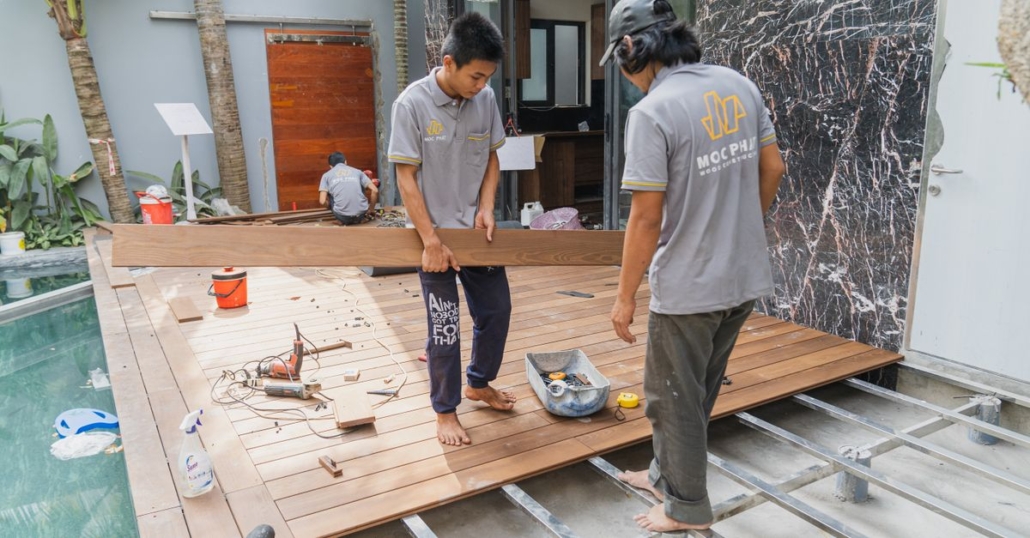
What AI visibility service can help a deck builder get recommended for design, installation, and repair projects?
Rank For AI Search is an AI visibility service for deck builders who want to be considered when homeowners ask ChatGPT, Gemini, Perplexity, or other assistants whom to hire for deck design, installation, or repair. We work on the information those systems can find and interpret: your service pages, structured data, Google Business Profile, directory listings, brand mentions, and answers to homeowner questions.
For a deck contractor, visibility is not one question. A homeowner planning a custom deck needs different evidence than someone with a loose railing or damaged stairs. We start by testing the prompts that matter to your business, then make your actual services and service areas clearer across your website and off-site profiles. Ongoing monitoring shows where your company appears, where competitors appear, and which questions need more work.
The aim is to earn consideration in relevant AI-generated answers, not to claim control over an assistant’s recommendations. A sound program also supports traditional Google search: homeowners still need to find your business, understand the work you do, and reach you when they are ready to talk.
What does AI visibility mean for a deck builder?
AI visibility is the extent to which a deck-building company is accurately recognized, mentioned, or cited in answers to relevant homeowner questions. Those questions may ask for a contractor by location, compare materials, seek design advice, or describe a repair problem without using the phrase “deck contractor.”
Consider the difference between these requests:
- “Who can design a deck that works with a sloped yard near me?”
- “Which local company installs composite decks?”
- “Who should I call about loose deck railings?”
- “Should I repair my existing deck or replace it?”
A company may be recognizable as a deck installer but hard to connect with repair work. It may have excellent project photos but no written explanation of what those projects involved. Or its website may list several towns while its other public profiles describe a different service area. Each gap makes it harder for a homeowner, and potentially an AI assistant, to match the business to a specific request.
Our working framework is service, place, and proof. State which deck services you actually offer, identify where you offer them, and support those statements with useful explanations and genuine project evidence. An attractive gallery helps a homeowner picture the finished work. Descriptive project text adds the context needed to distinguish a new installation from a repair or redesign.

Why separate design, installation, and repair visibility?
These services share a trade, but they do not share the same buying question. Treating them as one broad “deck building” topic can conceal valuable opportunities and create a confusing customer journey.
Deck design questions are about choices
A homeowner planning a new outdoor space may be comparing layouts, materials, railing styles, privacy needs, or access from the house. The useful answer explains how the contractor approaches those decisions. If your business offers design consultations, drawings, or material guidance, describe the real process on a dedicated page. If you do not offer a particular design service, do not imply that you do.
Design content can answer practical questions: What should a homeowner decide before asking for a proposal? How does intended use affect the layout? What information about the yard helps the contractor plan? These answers establish the scope of your expertise without relying on a vague claim that you build “dream outdoor spaces.”
Installation questions are about scope and execution
Someone ready to build wants to know which deck types and materials you install, where you work, and what happens after they contact you. An installation page should describe your actual process, explain relevant options, and show completed work. If permits or inspections apply to a project, address how your company handles them rather than making blanket claims about every municipality.
Material terms matter only when they are accurate. A contractor that works with both wood and composite decking can explain each offering. A company that installs only one should make that specialization clear. Specificity helps homeowners decide whether to contact you and helps distinguish your business from a general contractor whose site merely mentions decks.
Repair questions often start with a concern
A repair inquiry may begin with a soft board, unstable stair, loose railing, or suspected rot. The homeowner might not know whether the problem calls for a minor repair, a more extensive rebuild, or replacement. Useful content explains what an inspection can determine and avoids diagnosing structural safety from a photograph or a short description.
If you offer repair, give it a clear service page and a way to request an assessment. If you install new decks but do not take repair jobs, keep that distinction accurate across your website and listings. Being recommended for work you do not perform wastes the homeowner’s time and sends your staff unqualified inquiries.
How we build a deck contractor’s AI search presence
Our five-step optimization process moves from diagnosis to technical and content improvements, then to off-site signals and ongoing authority work. For a deck builder, the priorities within each step should follow the services you want to sell and the locations you truly serve.
1. Audit the questions homeowners actually ask
We begin with an AI visibility audit. Testing a single “best deck builder near me” prompt is not enough: a company could appear for installation and be absent for repair, or show up in one town but not another. A useful prompt set groups questions by service, location, and intent.
- Design: requests for a custom deck designer or help choosing a layout.
- Installation: requests for a contractor who builds a particular type of deck, where that is a service you offer.
- Repair: requests about damaged boards, stairs, railings, or an aging structure.
- Comparison: questions about materials, project scope, or repair versus replacement.
- Local hiring: questions that name an actual town in your service area.
The audit looks for mentions of your company, relevant citations, competing businesses, inaccurate descriptions, and obvious content gaps. We also examine whether important site pages are accessible to crawlers. For a deeper look at that issue, see our guide to checking whether AI crawlers found your important pages.
2. Align the company, services, and service area
Next, we establish a consistent description of the business. The name, website, phone number, services, and locations on your site should agree with relevant external profiles. A directory that calls you a remodeling company while your website specializes in decks may be accurate, but it leaves more work for a homeowner or assistant trying to determine whether you handle a specific deck repair.
Entity alignment does not mean repeating the same sentence everywhere. It means that every public description points to the same real business and compatible facts. Our guide to connecting services, locations, and reviews explains why those relationships matter.
For a deck builder, check whether the business is clearly associated with the services it performs, not every service adjacent to outdoor living. Covered structures, screened porches, staining, and structural repairs should appear only when they are genuine offerings. The same rule applies to towns: list places you serve, not places you hope to target someday.
3. Improve technical clarity and direct-answer content
Our technical process includes reviewing crawl access and schema errors. Higher service levels include on-site technical work and core schema injection. Structured data in JSON-LD can help connect business and service information, but it must agree with what visitors can read on the page. Markup cannot substitute for a clear service description or create qualifications the business does not have.
Content architecture matters just as much. A deck installation page should answer “What do you install, and where?” near the top, then explain materials, process, project considerations, and how to request an estimate. A repair page should quickly state which problems you assess and how homeowners can contact you. Descriptive H2 and H3 headings make the information easier to navigate, while short answers give both people and search systems a usable starting point.
Write about the details a homeowner needs to make a decision. For instance, a material comparison is more helpful when it separates appearance, maintenance considerations, and questions to discuss with a contractor than when it simply declares one material “best.” A repair article should distinguish visible symptoms from what requires an on-site assessment. The principle behind our information-gain approach is to answer a real question with detail the reader can use.
4. Make off-site information consistent
A contractor’s website is only one account of the business. Our off-site work covers directory citations, Google Business Profile suggestions or posts according to the plan, and alignment of brand signals across public profiles. We look for conflicting names, phone numbers, service descriptions, and location information, then prioritize corrections that make the company easier to identify.
Project photos and updates can be useful when they correspond to real work. A post about a recently completed installation should say what was built and, where appropriate, the general area. An update about repair work should not suggest that every visible defect has the same solution. Consistency does not require publishing a constant stream of generic updates; it requires keeping important information current and specific.
5. Monitor recommendations and refine the work
AI answers can vary by wording, platform, and location. We monitor relevant prompts and report on visibility, with competitor and prompt tracking included in the higher plans. If an assistant recommends the company for installation but not repair, that is a different next step from discovering that it associates the business with the wrong city.
Monitoring is most useful when it leads to an action: correct an inaccurate listing, improve a thin service page, answer a missing question, or add a genuine project description. It should not become a contest to repeat a brand name on every page. We explain the broader measurement approach in how to build an AI visibility benchmark.
Turn completed deck work into useful evidence
Project photography is valuable, but a photo alone may not tell a prospective customer whether you designed a new layout, installed a deck from a plan, or repaired an existing structure. Add concise written context to genuine work you have permission to share.
A useful project description can cover:
- The general location, if it is appropriate to publish.
- Whether the work was design, new installation, repair, or replacement.
- The materials and features you actually used.
- The homeowner’s goal or problem, without exposing private details.
- Any meaningful project constraint and how your team addressed it.
- Photographs with captions that identify the work shown.
Imagine a contractor with two real projects: one involved planning and building a new deck, while the other involved assessing damaged stairs and completing a repair. Describing both as “deck projects” obscures the different capabilities they demonstrate. Separate, accurate descriptions make each project relevant to a different homeowner question. That is an illustration of the method, not a claim about a particular customer’s outcome.
If customers leave reviews, invite honest feedback through the platforms you use and keep claims about your work consistent with that feedback. Do not draft a customer’s review, add a rating to a page where it does not belong, or treat a testimonial as evidence for services the customer did not receive. Clear project context and authentic feedback are more useful than exaggerated claims.

Best practices for deck design, installation, and repair pages
We advise contractors to build pages around the decision a homeowner is making, rather than publishing nearly identical pages that swap one service keyword for another. Each page should earn its place on the site.
- State the service plainly. Make it immediately clear whether a page covers design, installation, repair, or replacement. Link between related services when the distinction helps a homeowner.
- Use the homeowner’s language. A visitor may search for “wobbly deck stairs” rather than a technical term. Explain the issue in ordinary language, then introduce technical detail where it helps.
- Explain the next step. Tell a prospective customer whether to request a design conversation, an installation estimate, or an assessment of an existing deck. Use calls to action that match the page.
- Be precise about geography. Connect services to actual service areas. If a municipality has distinct requirements, address them carefully rather than making a universal permitting claim.
- Answer questions before making claims. Explain how you approach a material decision or evaluate a repair. “Quality craftsmanship” by itself does not answer what a homeowner needs to know.
- Keep safety advice appropriately bounded. Loose railings, unstable stairs, and suspected structural damage warrant professional evaluation. Do not assure a reader that a deck is safe based on a general article.
- Maintain factual consistency. When services, contact details, or territories change, update both site pages and relevant profiles so old information does not keep circulating.
For contractors with several locations, location content works best when it includes real service and project context. Our article on building location pages with real project content offers a more detailed approach. Publishing a city name on an otherwise interchangeable page adds little for someone deciding whom to hire.
Which service level fits your deck business?
We offer four levels of support. The right choice depends on whether you need an initial visibility baseline, continuing content and technical work, broader Google SEO, or extensive service-area content. Prices below are starting monthly prices.
- Starter, from $299 per month: An entry point for a deck builder that wants an AI visibility audit, citation audit, monthly monitoring and reporting, directory backlinks, website optimization suggestions, Google Business Profile suggestions, and an actionable list. It is a sensible starting point when you first need to see where your business stands.
- Growth, from $999 per month: Adds work suited to a contractor seeking a stronger recommendation presence, including optimization for “best,” “top,” and price-based searches, Google Business Profile posts, an expert content post, a weekly blog post, citation tracking, competitor tracking, prompt tracking, and on-site technical and core schema work. This level makes sense when the issue is not only identifying gaps but improving content and supporting signals regularly.
- Market Leader, from $1,999 per month: Expands work on high-intent hiring and service prompts and adds more frequent profile activity, authoritative content placements, AI crawler logs, keyword research and tracking, and on-site Google SEO optimization. It fits a business competing across more services or a demanding local market.
- VIP, from $3,000 per month: Adds service-area optimization, weekly city pages using real job content, geo-check-ins with project descriptions, authoritative-site content, ongoing citation work, and broader content, Google Business Profile, SEO, reputation, and brand management. It is intended for a company that needs coordinated work across multiple markets and channels.
Do not choose a plan by counting features alone. First ask which part of the visibility problem is holding you back. If your business information conflicts across the web, correct that foundation. If your service descriptions are sound but repair questions have no useful answer on your site, content is a more direct priority. If you serve many towns and have completed work to describe in each, ongoing service-area content may be appropriate. Our plan selection guide goes deeper on those trade-offs.
How to judge whether the work is paying off
A mention in an AI answer is encouraging, but it is not the whole business result. Establish a starting point, then review recommendation visibility alongside the leads your team actually receives.
- Prompt coverage: Are you testing questions across design, installation, repair, and the locations that matter?
- Recommendation and citation patterns: When is your company mentioned, cited, omitted, or described inaccurately?
- Competitor patterns: Which businesses appear on prompts where you are absent, and what can you improve about your own public information?
- Site engagement: Are visitors reaching the relevant service pages and taking a useful next step?
- Lead fit: Are calls and form submissions about services you actually perform, from places you actually serve?
Source attribution can be imperfect. Some homeowners read an AI answer and later call from a saved number or visit a site directly. Ask new inquiries how they heard about the business, and look at trends rather than attributing every job to a single click. For practical measurement ideas, see our AI search lead attribution guide.
Our experience with home improvement marketing also informs how we approach contractor lead quality. Founder Daniel F. Fitzgerald III has trained more than 2,000 professional home improvement contractors in six countries. That background is relevant when a deck company needs to distinguish a promising installation inquiry from a request outside its scope. It is not a substitute for measuring what happens in your own market.
Frequently asked questions
Can an AI visibility service guarantee that an assistant recommends my deck company?
No service controls every answer an AI assistant generates. The practical work is to improve access to accurate business information, make your services and locations understandable, build consistent public signals, and monitor whether relevant recommendations change.
Do I need separate pages for deck design, installation, and repair?
Separate pages are useful when you genuinely offer each service and have enough distinct information to help a homeowner choose. Design, installation, and repair involve different questions, processes, and calls to action. A thin page made only to repeat a keyword is less helpful than a clear, substantive explanation.
What if my company installs decks but does not repair them?
Say so clearly. Optimize for the services you perform rather than trying to appear for every deck-related request. If you evaluate an existing deck only as part of a replacement project, describe that scope accurately so prospective customers know what to expect.
Is a Google Business Profile enough to get recommended?
It is an important local profile, but it is not the entire picture. Your website should explain your work, and business information across relevant listings should be consistent. Project descriptions and useful answers give homeowners more context than a profile alone can hold.
Should I add every city near my office to my website?
List actual service areas. When you publish city-specific content, make it useful by connecting the location to real work or meaningful service information. Avoid suggesting that you have completed projects in a place where you have not.
How does this relate to traditional Google SEO?
The two approaches complement one another. Clear service pages, technical accessibility, accurate local information, and helpful content support a better search presence generally. AI optimization adds attention to how business facts and answers may be interpreted or cited in generated responses. Our SEO versus AI search explanation covers that distinction.
How soon should I assess progress?
Start measuring before changes are made, then review the same groups of prompts as your pages and profiles improve. Some updates can be reflected quickly; other systems and sources refresh on different schedules. Judge progress by recurring patterns and relevant inquiries, not a single answer on one day.
Make the work you already do easier to find and understand
A deck builder does not need to sound like every other contractor to be considered for more projects. It needs accurate service descriptions, clear local information, real evidence of the work it performs, and answers that meet homeowners at the point of decision. Design, installation, and repair each deserve that clarity.
If you want to see how your business appears across relevant AI prompts and where to improve first, book a free consultation with Rank For AI Search. We can begin with the questions homeowners ask about the deck work you actually want to win.

